Voltra
Calories in oats: dry and cooked, protein per 50 g, and blood sugar
Dry oats have 379 kcal and 13.2 g of protein per 100 g [1]. Cooked with water they have 71 kcal per 100 g, because porridge is mostly water [2]. So 50 g of dry oats is about 190 kcal and 6.6 g of protein (calculated), however much water you cook it in.
Rolled-oat porridge has a glycaemic index of 55, against 79 for instant oat porridge [8]. The common logging mistake is using the dry figure for cooked porridge, or the cooked figure for dry oats: the two differ about fivefold.
Calories per 100 g: dry and cooked
| Oats, per 100 g | kcal | Protein | Carbs | Fibre | Fat |
|---|---|---|---|---|---|
| Dry (rolled or quick) [1] | 379 | 13.2 g | 67.7 g | 10.1 g | 6.5 g |
| Cooked with water, no salt [2] | 71 | 2.5 g | 12.0 g | 1.7 g | 1.5 g |
USDA FoodData Central. Dry means oats as they come out of the pack; USDA's record covers regular (rolled) and quick oats. Carbs include the fibre.
Some sites give 389 kcal and 16.9 g of protein per 100 g. That's a different USDA record, for oats supplied through its Food Distribution Program [3]. We use the regular and quick oats record because it has a matching cooked record [1][2]. USDA's newer analysis of rolled oats, from 2022, comes to about the same 379 kcal [4].
A cup, 50 g and other portions
| Oats | Weight | kcal | Protein | Carbs |
|---|---|---|---|---|
| Dry, ⅓ cup | 27 g | 102 | 3.6 g | 18.3 g |
| Dry | 30 g | 114 | 4.0 g | 20.3 g |
| Dry, US reference serving | 40 g | 152 | 5.3 g | 27.1 g |
| Dry | 50 g | 190 | 6.6 g | 33.9 g |
| Dry, 1 cup | 81 g | 307 | 10.7 g | 54.8 g |
| Cooked with water, ¾ cup | 175 g | 124 | 4.4 g | 21.0 g |
| Cooked with water, 1 cup | 234 g | 166 | 5.9 g | 28.1 g |
Calculated from the values per 100 g above and USDA's weights [1][2][4]. 40 g is the US reference amount for a serving of oats [4].
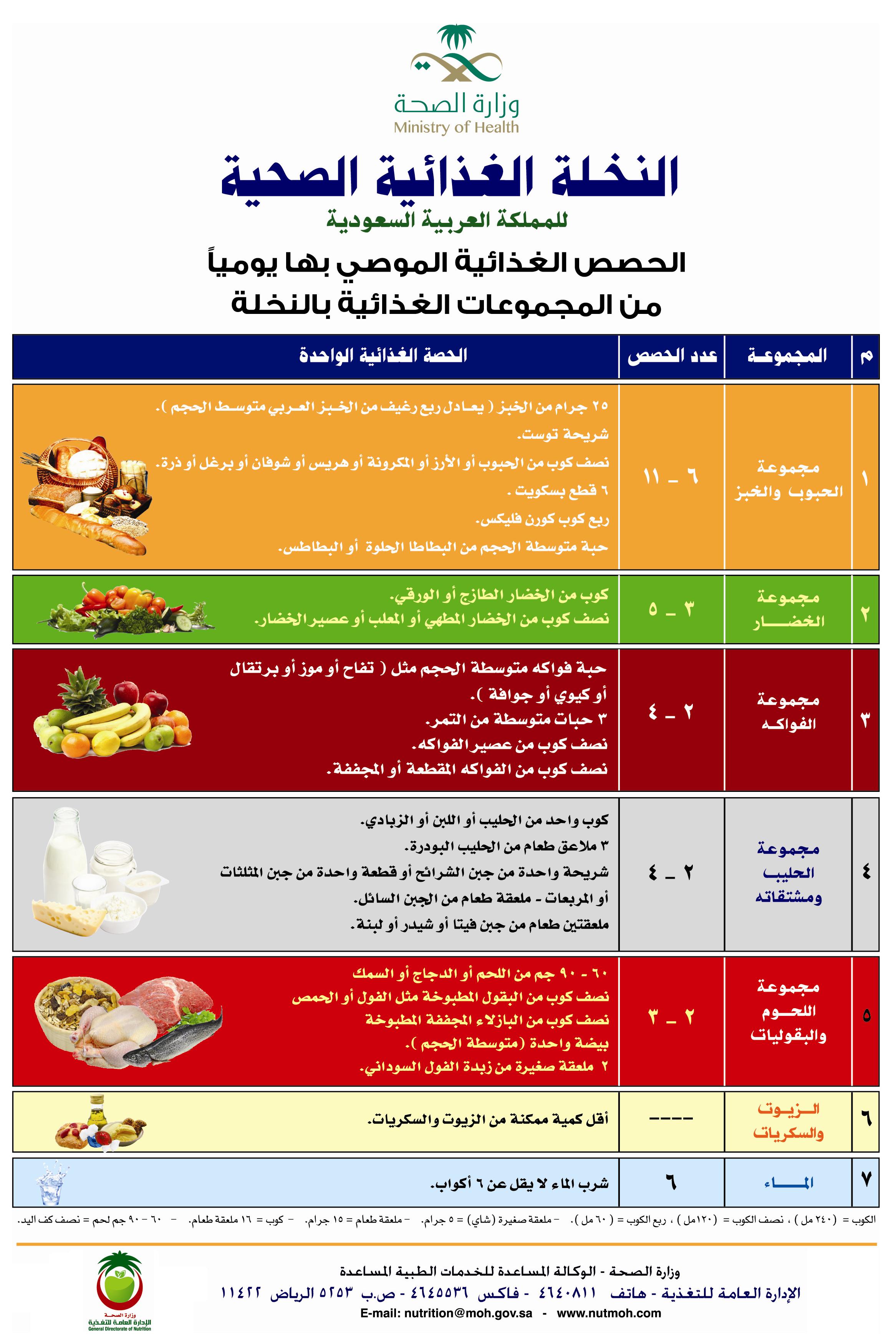
Saudi Arabia's Healthy Food Palm counts half a cup of oats as one grain serving, and recommends 6 to 11 grain servings a day [11]. It doesn't say dry or cooked, and that matters: half a cup of dry oats is about 40 g and 153 kcal, and half a cup of cooked oats about 117 g and 83 kcal (calculated from USDA's cup weights) [1][2]. For bread, see our bread guide, with Saudi makers' labels.
Dry or cooked: the logging mistake
Cooking doesn't change the calories in your oats; it adds water. 100 g of dry oats has 379 kcal and 100 g of porridge 71, so a bowl of porridge weighs about five times as much as the dry oats in it (calculated: 379 divided by 71 is 5.3) [1][2]. 50 g of dry oats makes about 270 g of porridge cooked with water, depending on how much water you use (calculated).
- Weighing the cooked bowl and logging it as dry oats counts about five times too many calories: 270 g logged as dry is about 1,000 kcal instead of 190 (calculated).
- Weighing dry oats and logging them as cooked counts about five times too few: 50 g logged as cooked is about 36 kcal instead of 190 (calculated).
Weigh oats dry when you can: the dry weight stays the same however you cook them.
Oats with milk
| 50 g dry oats cooked with | kcal | Protein | Carbs | Fat |
|---|---|---|---|---|
| Water | 190 | 6.6 g | 33.9 g | 3.3 g |
| 1 cup full-fat milk (244 g) | 338 | 14.3 g | 45.6 g | 11.2 g |
| 1 cup skimmed milk (245 g) | 273 | 14.9 g | 46.0 g | 3.5 g |
Calculated by adding USDA's figures for dry oats and for milk with 3.25% fat or fat-free [1][5][6].
A tablespoon of honey (21 g) adds about 64 kcal (calculated) [7]. For fruit on top, see our banana guide.
Carb or protein?
Mostly carbohydrate. 100 g of dry oats has 67.7 g of carbohydrate, of which 10.1 g is fibre, and 13.2 g of protein: about five times as much carbohydrate as protein [1].
So oats on their own are a carbohydrate food with some protein. 50 g gives you 6.6 g of protein; cooking it in a cup of milk more than doubles that, to about 14 g (calculated) [1][5]. For your daily target, see how much protein you need a day.
Do oats raise blood sugar?
All oats raise blood sugar, since they're mostly starch [1]. How fast depends on the kind. The 2008 international tables of glycaemic index (GI), where glucose is 100, give these averages [8]:
| Food | GI |
|---|---|
| Rolled-oat porridge | 55 |
| Muesli | 57 |
| White rice, boiled | 73 |
| White wheat bread | 75 |
| Instant oat porridge | 79 |
| Cornflakes | 81 |
Averages from several studies for each food, Table 1 [8]. The same paper calls 55 or less low and 70 or more high. Calories for rice are in our rice guide.
So rolled-oat porridge sits at the top of the low range, and instant oat porridge is as high as white bread [8].
Oats' soluble fibre, β-glucan, blunts the rise when it's added to a meal. A 2021 review of 103 single-meal comparisons in 538 people found that adding oat β-glucan, as a concentrate or as oat bran, to a carbohydrate meal cut the rise in blood sugar after the meal by 23% and its peak by 28%, against meals with the same carbohydrate [9]. The effect grew with the dose, held only for β-glucan of high molecular weight (above 300 kg/mol), and was similar in people with and without diabetes [9].
Whether after-meal rises matter if you don't have diabetes is covered in our guide to blood sugar spikes after eating.
Oats and cholesterol
A 2016 review of 58 trials (3,974 people) lasting at least 3 weeks found that diets with oat β-glucan, at a median of 3.5 g a day, lowered LDL ("bad") cholesterol by 0.19 mmol/L, about 7 mg/dL (calculated), compared with control diets [10]. Results varied a lot between trials [10].
USDA's analysis of rolled oats found 7.52 g of β-glucan per 100 g [4], so 3.5 g is in about 47 g of dry rolled oats (calculated).
Do oats make you gain weight?
Only through their calories, like any food. What changes the number is the portion and what goes in the bowl: 50 g of dry oats is about 190 kcal cooked in water, about 338 with a cup of full-fat milk, and a tablespoon of honey adds about 64 (calculated) [1][5][7]. Weigh the dry oats once or twice to see what your usual scoop holds. For your daily total, see how many calories you need a day.
How to log it in Voltra
- Oats you weighed dry: on the Eat tab, tap Search, type "oats" and choose Oats, rolled (dry). Half a cup is set at 40 g; change the grams to what you weighed.
- Plain porridge you weighed after cooking: tap Search and type "oatmeal cooked". One cup is set at 240 g.
- Oats with milk, fruit or honey: tap Scan a meal and photograph the bowl, or tap Describe and type it with the dry weight, for example "50 g oats, 1 cup full-fat milk, 1 tablespoon honey". Check the grams, then tap Log.
Frequently asked
How many calories are in oats?
379 kcal per 100 g of dry oats and 71 per 100 g cooked with water, in USDA's data. A cup of dry oats (81 g) is about 307 kcal, and a cup of cooked oats (234 g) about 166 (calculated).
How much protein is in 50 g of oats?
About 6.6 g, with about 190 kcal (calculated from USDA's 13.2 g of protein and 379 kcal per 100 g of dry oats). Cooked in a cup of milk instead of water, about 14 g.
Are oats a carb or a protein?
Mostly carbohydrate. 100 g of dry oats has 67.7 g of carbohydrate, including 10.1 g of fibre, and 13.2 g of protein: about five times as much carbohydrate as protein.
How many calories are in 3 spoons of oats?
It depends on the spoon, and USDA gives no tablespoon weight for dry oats. Weigh your 3 spoonfuls once on a kitchen scale: every 10 g of dry oats is about 38 kcal (calculated).
Do oats raise blood sugar?
They do, but rolled oats less than many starchy foods. The 2008 international tables give rolled-oat porridge a glycaemic index of 55, against 79 for instant oat porridge, 73 for boiled white rice and 81 for cornflakes.
Do oats make you gain weight?
Only through their calories, like any food. 50 g of dry oats is about 190 kcal cooked in water; a cup of full-fat milk brings it to about 338, and a tablespoon of honey adds about 64 (calculated).
How many calories are in oats with milk?
About 338 kcal for 50 g of oats cooked with a cup (244 g) of full-fat milk, and about 273 with skimmed milk, with about 14 to 15 g of protein (calculated from USDA).
Sources
- USDA FoodData Central. Cereals, oats, regular and quick, not fortified, dry (FDC 173904). Weights: 1 cup 81 g, 0.33 cup 27 g.
- USDA FoodData Central. Cereals, oats, regular and quick, unenriched, cooked with water (includes boiling and microwaving), without salt (FDC 173905). Weights: 1 cup 234 g, 0.75 cup 175 g.
- USDA FoodData Central. Oats (Includes foods for USDA's Food Distribution Program) (FDC 169705). 389 kcal and 16.9 g of protein per 100 g.
- USDA FoodData Central, Foundation Foods (2022). Oats, whole grain, rolled, old fashioned (FDC 2346396). 379 kcal per 100 g; β-glucan 7.52 g per 100 g, the mean of 8 samples (6.07 to 8.88 g); reference amount 40 g.
- USDA FoodData Central. Milk, whole, 3.25% milkfat, with added vitamin D (FDC 171265). Weight: 1 cup 244 g.
- USDA FoodData Central. Milk, nonfat, fluid, with added vitamin A and vitamin D (fat free or skim) (FDC 171269). Weight: 1 cup 245 g.
- USDA FoodData Central. Honey (FDC 169640). Weight: 1 tablespoon 21 g.
- Atkinson FS, Foster-Powell K, Brand-Miller JC (2008). International tables of glycemic index and glycemic load values: 2008. Diabetes Care 31(12):2281–2283. Table 1.
- Zurbau A, Noronha JC, Khan TA, Sievenpiper JL, Wolever TMS (2021). The effect of oat β-glucan on postprandial blood glucose and insulin responses: a systematic review and meta-analysis. Eur J Clin Nutr 75(11):1540–1554. Abstract. Two authors work for INQUIS Clinical Research, a contract research company; another declares in-kind food donations for a trial from companies including Quaker.
- Ho HV, Sievenpiper JL, Zurbau A, et al. (2016). The effect of oat β-glucan on LDL-cholesterol, non-HDL-cholesterol and apoB for CVD risk reduction: a systematic review and meta-analysis of randomised-controlled trials. Br J Nutr 116(8):1369–1382. Abstract.
- Saudi Ministry of Health, General Directorate of Nutrition (2012). جدول الحصص الغذائية (النخلة الغذائية الصحية). In Arabic. The Healthy Food Palm servings table.
Sources checked on 6 October 2026. Values are rounded to one decimal place.
Log your food and training with Voltra. Free to download; the yearly plan starts with a 7-day free trial. Works fully in English and Arabic.