Voltra
High-protein meals: how to build them, with Gulf examples
Trials and position stands on protein at meals mostly work with 20 to 40 g a meal, or about 0.25 to 0.4 g per kg of body weight [1] [2]: about 18 to 28 g if you weigh 70 kg (calculated). The easy way there: one serving of meat, chicken or fish, 90 g cooked in Kuwait's dietary guide [11], gives about 17 to 28 g of protein, and adding eggs, dairy or beans brings a meal to about 25 to 46 g (calculated).
How much protein per meal
Most of what's known comes from lab studies that measure muscle protein synthesis, the rate at which muscle builds new protein, for a few hours after a protein drink, usually in young men who have just lifted weights.
- About 20 g in the early studies. Six young men drank 0, 5, 10, 20 or 40 g of egg protein after a leg workout. Muscle protein synthesis rose up to 20 g and no further, and at 20 and 40 g the body burned more of the protein for energy [3].
- More after a whole-body workout. In 30 trained men, 40 g of whey raised it about 20% more than 20 g (calculated from the published rates) [4]. GlaxoSmithKline funded the study and supplied the whey.
- No clear ceiling in a 2023 trial. In 36 young men, 100 g of milk protein after a whole-body workout gave a larger response than 25 g, and it lasted more than 12 hours [5]. One author works for a dairy company, which the paper says had no role in the study.
- Older men needed more. In a pooled, retrospective analysis of lab data, the response levelled off at about 0.24 g per kg of body weight in men around 22 and about 0.40 g per kg in men around 71 [6].
From studies like these, the International Society of Sports Nutrition (ISSN) suggests 0.25 g of high-quality protein per kg of body weight, or 20 to 40 g, per meal, spread every 3 to 4 hours [1]. A 2018 review by Schoenfeld and Aragon suggests 0.4 g per kg at each of at least four meals, to reach at least 1.6 g per kg a day, and up to 0.55 g per kg a meal for someone eating 2.2 g per kg a day [2]. Both have industry ties: the ISSN is funded in part by companies that sell protein supplements [1], and Schoenfeld sits on a supplement maker's advisory board [2].
| Body weight | 0.25 g/kg | 0.4 g/kg | 0.55 g/kg |
|---|---|---|---|
| 60 kg | 15 g | 24 g | 33 g |
| 70 kg | 18 g | 28 g | 39 g |
| 80 kg | 20 g | 32 g | 44 g |
| 90 kg | 23 g | 36 g | 50 g |
| 100 kg | 25 g | 40 g | 55 g |
Calculated: body weight × grams per kg, per meal. The 0.25 g/kg column is the ISSN's figure [1]; 0.4 and 0.55 g/kg are Schoenfeld and Aragon's [2]. For the daily total, see our protein-per-day guide.
Can your body use more than 30 g at once?
Yes. Absorption isn't the limit: Schoenfeld and Aragon describe the amount of protein the body can absorb as "virtually unlimited" [2]. The real question is how much of a big dose goes to building tissue. The body burns more of a larger dose for energy, but not all of the extra: some is still used to build tissue [2], and in the 2023 trial the response to 100 g lasted more than 12 hours [5].
Does spreading it over the day help?
In short lab studies, yes:
- After a workout, 24 trained men took 80 g of whey over 12 hours as 8 doses of 10 g, 4 of 20 g or 2 of 40 g. Four doses of 20 g, one every 3 hours, gave the most muscle protein synthesis [7]. They had nothing but whey, and 80 g in 12 hours is under 1 g per kg of body weight, less than most people who lift eat [2]. Two of the authors worked for Nestlé during the study [7].
- Eight adults ate the same protein for a week, either spread evenly, about 30 g at each of three meals, or skewed, about 11 g at breakfast, 16 g at lunch and 63 g at dinner. Muscle protein synthesis over 24 hours was 25% higher on the even days [8]. The study was part-funded by the US Beef Checkoff [8].
Over weeks and months, it's less clear. A 2021 systematic review of 15 studies found an even spread linked with more muscle mass in 3 of 7 studies, with more strength in 2 of 7, and with more protein synthesis in 1 of 6 [9]. A 2020 review called the evidence limited and inconsistent, and said the effect of the spread can't be separated from the total eaten; for adults eating 0.8 to 1.3 g per kg a day, it found the most support for having at least one meal with enough protein to maximise muscle protein synthesis [10]. Schoenfeld and Aragon note that long-term studies haven't consistently matched the short lab results [2]. In practice, spreading your daily total over 3 or 4 meals, as the ISSN suggests, is a practical way to reach it [1].
Build the plate with Gulf portions
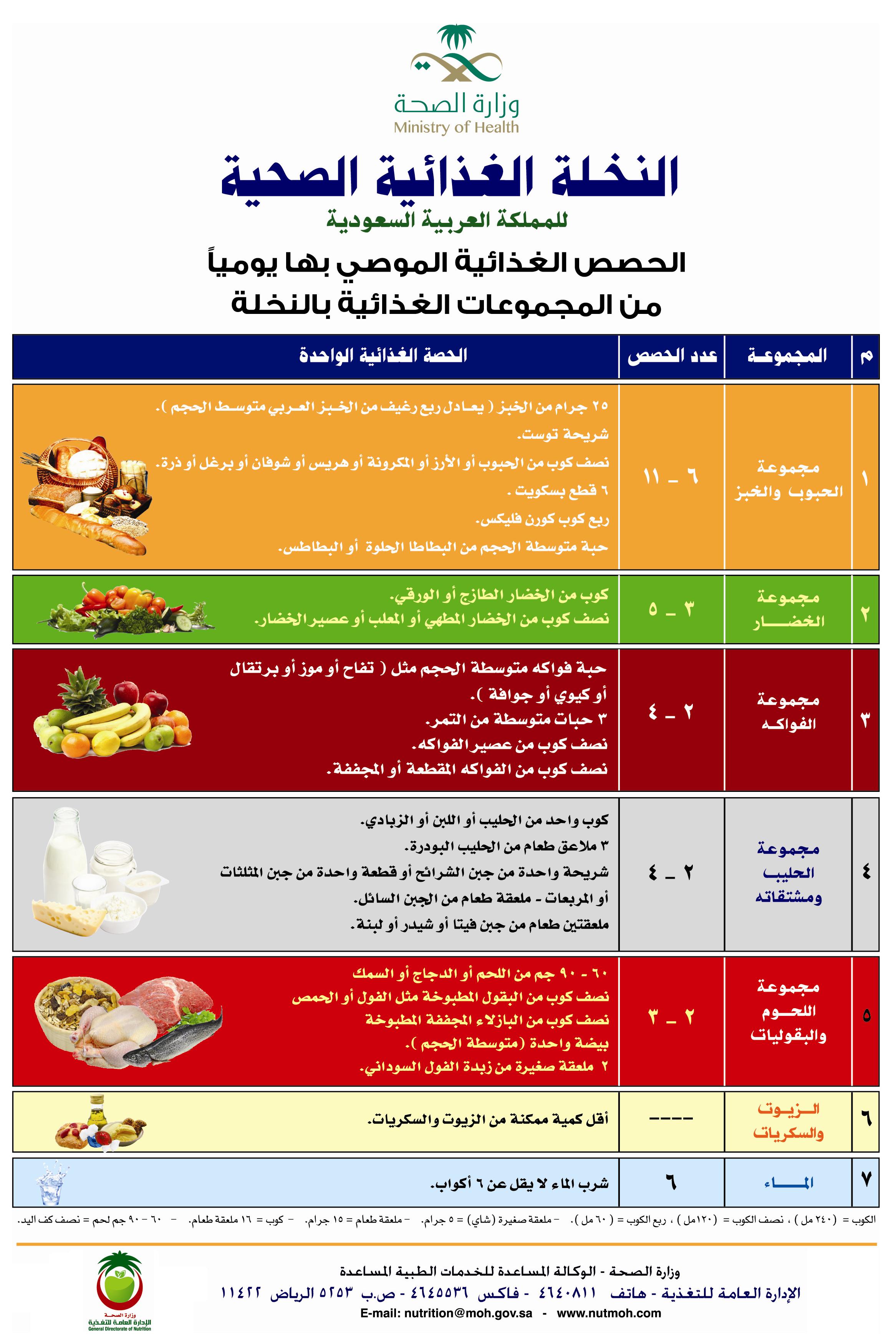
The Gulf's official food guides count protein foods in servings, not grams of protein. Kuwait's guide counts 90 g of cooked lean meat, fish or poultry as one serving and recommends 3 servings a day for men and 2 for women [11]. Saudi Arabia's Healthy Food Palm counts 60 to 90 g of meat, chicken or fish as one serving, about half the palm of your hand, and puts half a cup of cooked beans such as foul or chickpeas, or one medium egg, in the same group, at 2 to 3 servings a day [12]. A serving isn't a fixed amount of protein, though:
| One serving | Weight | Protein (g) |
|---|---|---|
| Chicken breast, roasted | 90 g | 27.9 |
| Hammour (grouper), cooked | 90 g | 22.4 |
| Lamb, lean, cooked | 90 g | 25.4 |
| Shrimp, cooked | 90 g | 21.6 |
| Tuna, canned in water, drained | 90 g | 17.5 |
| Egg, 1 medium | 44 g | 5.5 |
| Foul (fava beans), cooked, ½ cup | 85 g | 6.5 |
| Chickpeas, cooked, ½ cup | 82 g | 7.3 |
| Milk, whole, 1 cup | 244 g | 7.7 |
| Plain yogurt, whole milk, 1 cup | 245 g | 8.5 |
| Labneh, 2 tablespoons | 30 g | 3.9 |
The 90 g rows use Kuwait's serving [11]; the egg, beans, milk and yogurt rows use the Saudi palm's servings [12]; labneh is Kuwait's dairy serving of 2 tablespoons (30 g) [11]. Protein calculated from USDA FoodData Central [13] and, for labneh, Bahrain's 2011 food composition tables [15].
A simple way to build a high-protein plate from those servings:
- Start with one serving of meat, chicken or fish, 90 g cooked: about 17 to 28 g of protein (calculated).
- Add one more protein food: 2 eggs, a cup of yogurt or milk, or a cup of cooked foul, chickpeas or lentils, for another 8 to 18 g (calculated).
- Fill the rest with vegetables and a measured amount of rice or bread. The Saudi palm counts half a cup of rice as one grain serving [12].
That puts a meal at about 25 to 46 g of protein (calculated). Three such meals use 3 servings of meat, chicken or fish, Kuwait's daily figure for men; with 2 for women, build one meal on eggs, dairy or legumes instead [11].
Breakfast
Breakfast is often the weak spot: it's typically rich in carbohydrate and low in protein [8]. These three come to about 28 to 31 g (calculated):
| Food | Protein (g) | kcal |
|---|---|---|
| Eggs, foul and bread | ||
| 2 large eggs, hard-boiled (100 g) | 12.6 | 155 |
| Foul (fava beans), boiled, 1 cup (170 g) | 12.9 | 187 |
| White pita bread, 1 large (60 g) | 5.5 | 165 |
| Total | 31 | 507 |
| Eggs with labneh | ||
| 3 large eggs, hard-boiled (150 g) | 18.9 | 233 |
| Labneh, 2 tablespoons (30 g) | 3.9 | 46 |
| Whole-wheat pita, 1 large (64 g) | 6.3 | 168 |
| Total | 29 | 446 |
| Greek yogurt bowl | ||
| Greek yogurt, plain, nonfat, 1 pot (170 g) | 17.3 | 100 |
| Rolled oats, ⅓ cup (27 g) | 3.6 | 102 |
| Almonds, a handful (28 g) | 6.0 | 164 |
| Medjool dates, 2 (48 g) | 0.9 | 133 |
| Total | 28 | 500 |
USDA FoodData Central [13]; labneh from Bahrain's 2011 tables [15]. Calculated; the amounts are examples.
Lunch and dinner
Gulf rice dishes can be high in protein, but it depends on how much chicken or fish is on the plate. Chicken machboos analysed in Kuwait and Bahrain had 5.0 to 12.4 g of protein per 100 g, so a 400 g plate holds anywhere from 20 to 50 g (calculated) [14] [15] [16]. Our machboos guide compares the analyses. The rice itself adds little: a cup of cooked white rice has about 4 g (calculated) [13].
| Food | Protein (g) | kcal |
|---|---|---|
| Chicken machboos with yogurt | ||
| Chicken machboos (400 g) | 38.4 | 624 |
| Plain yogurt, whole milk, 1 cup (245 g) | 8.5 | 149 |
| Total | 47 | 773 |
| Fish machboos (hammour) | ||
| Fish machboos (400 g) | 52.4 | 532 |
| Total | 52 | 532 |
| Grilled safi with rice | ||
| Grilled safi (rabbitfish), flesh (150 g) | 41.0 | 223 |
| White rice, cooked, 1 cup (158 g) | 4.3 | 205 |
| Total | 45 | 429 |
| Chicken breast, hummus and bread | ||
| Chicken breast, roasted (120 g) | 37.2 | 198 |
| Hummus, 2 tablespoons (30 g) | 2.3 | 71 |
| White pita bread, 1 large (60 g) | 5.5 | 165 |
| Total | 45 | 434 |
| Chicken saloona with rice | ||
| Chicken saloona (300 g) | 26.1 | 276 |
| White rice, cooked, 1 cup (158 g) | 4.3 | 205 |
| Total | 30 | 481 |
| Meat tikka with bread | ||
| Meat tikka (150 g) | 38.3 | 332 |
| White pita bread, 1 large (60 g) | 5.5 | 165 |
| Total | 44 | 497 |
Per 100 g: chicken machboos and chicken saloona from Kuwait's 1989 tables [14]; grilled safi from Bahrain's 2011 tables [15]; fish machboos and meat tikka from Bahrain's 2025 tables [16]; everything else from USDA [13]. Calculated; the amounts are examples, so weigh yours.
Snacks and after training
Saudi Arabia's Ministry of Health recommends "15-25g of protein with some carbohydrates 30 minutes to two hours after training" [19]. A pot of Greek yogurt with 2 dates (about 18 g) or 2 eggs and a cup of milk (about 20 g) fits that (calculated) [13].
| Snack | Protein (g) | kcal |
|---|---|---|
| Greek yogurt, plain, nonfat, 1 pot (170 g) | 17.3 | 100 |
| 2 large eggs, hard-boiled (100 g) | 12.6 | 155 |
| Cottage cheese, 2% fat, ½ cup (113 g) | 11.8 | 92 |
| Baajela (boiled broad beans) (200 g) | 12.4 | 198 |
| Milk, whole, 1 cup (244 g) | 7.7 | 149 |
| Peanuts, a handful (28 g) | 7.3 | 161 |
| Tuna, canned in water, drained, 1 can (165 g) | 32.1 | 142 |
USDA FoodData Central [13]; baajela from Bahrain's 2011 tables [15]. Calculated.
A vegetarian day
Qatar's dietary guidelines say legumes are rich in protein, iron and zinc and can stand in for meat, and that vegetarians can meet their needs with foods such as beans, lentils, eggs, tofu, nuts and seeds [17]. Kuwait's guide adds that vegetarians should eat a variety of plant proteins and pay attention to vitamin B12, which is found only in animal foods [11]. This day includes eggs and dairy:
| Food | Protein (g) | kcal |
|---|---|---|
| Breakfast: eggs, foul and bread | ||
| 2 large eggs, hard-boiled (100 g) | 12.6 | 155 |
| Foul (fava beans), boiled, 1 cup (170 g) | 12.9 | 187 |
| White pita bread, 1 large (60 g) | 5.5 | 165 |
| Total | 31 | 507 |
| Lunch: lentils, rice and yogurt | ||
| Lentils, boiled, 1 cup (198 g) | 17.9 | 230 |
| White rice, cooked, 1 cup (158 g) | 4.3 | 205 |
| Plain yogurt, low fat, 1 cup (245 g) | 12.9 | 154 |
| Total | 35 | 589 |
| Snack: Greek yogurt and almonds | ||
| Greek yogurt, plain, nonfat, 1 pot (170 g) | 17.3 | 100 |
| Almonds, a handful (28 g) | 6.0 | 164 |
| Total | 23 | 264 |
| Dinner: falafel plate | ||
| Falafel, 4 pieces (68 g) | 9.1 | 226 |
| Hummus, 2 tablespoons (30 g) | 2.3 | 71 |
| Whole-wheat pita, 1 large (64 g) | 6.3 | 168 |
| Feta cheese (30 g) | 4.3 | 80 |
| Total | 22 | 545 |
| Day total | 111 | 1,906 |
USDA FoodData Central [13]; calculated. That's about 1.6 g per kg for someone who weighs 70 kg (calculated). Add vegetables, fruit and some oil to reach your calorie target.
A budget day
We don't give prices; they change too often. This day uses protein foods that official guides point to for cost: Qatar's guidelines say cooking dry legumes is cheaper than buying them canned [17], the USDA calls canned tuna in water "an inexpensive healthy protein choice" [18], and the ISSN calls eggs a cost-effective source of high-quality protein [1]. Qatar also advises canned fish packed in water, and light tuna rather than white (albacore) tuna to limit mercury [17].
| Food | Protein (g) | kcal |
|---|---|---|
| Breakfast: eggs and bread | ||
| 3 large eggs, hard-boiled (150 g) | 18.9 | 233 |
| White pita bread, 1 large (60 g) | 5.5 | 165 |
| Total | 24 | 398 |
| Lunch: tuna and rice | ||
| Tuna, canned in water, drained, 1 can (165 g) | 32.1 | 142 |
| White rice, cooked, 1 cup (158 g) | 4.3 | 205 |
| Total | 36 | 347 |
| Snack: milk | ||
| Milk, whole, 1 cup (244 g) | 7.7 | 149 |
| Total | 8 | 149 |
| Dinner: lentils and bread | ||
| Lentils, boiled, 1½ cups (297 g) | 26.8 | 345 |
| White pita bread, 1 large (60 g) | 5.5 | 165 |
| Total | 32 | 510 |
| Day total | 101 | 1,403 |
USDA FoodData Central [13]; calculated. Add vegetables, fruit and some oil to reach your calorie target.
Common mistakes
- A light breakfast and a heavy dinner. In the week-long trial above, that pattern gave less muscle protein synthesis than about 30 g at each meal [8]. An egg and foul breakfast gets you to about 31 g (calculated).
- Counting servings, not grams. One medium egg and 60 to 90 g of chicken breast are each one serving in the Saudi palm [12], but the egg has about 5.5 g of protein and the chicken 19 to 28 g (calculated) [13]. Kuwait's guide counts 2 tablespoons of hummus as a serving of meat alternatives [11]: about 2.3 g of protein (calculated) [13].
- Leaning on nuts for protein. A 28 g handful of almonds has 6 g of protein and 164 kcal; the same calories of roasted chicken breast give about 31 g (calculated) [13].
- Cooking it in plenty of oil or ghee. A tablespoon of olive oil adds 119 kcal and no protein (calculated) [13]. Kuwait's guide suggests boiling, grilling, air-frying or roasting instead of frying [11].
- Red meat at every meal. Kuwait's guide says: "Limit the consumption of red meat to no more than twice a week" [11]. Chicken, fish, eggs, dairy and legumes can cover the other meals.
- Weighing cooked, logging raw. Roasted chicken breast has 31.0 g of protein per 100 g and raw breast 22.5 g [13], so the entry has to match how you weighed it. Our chicken breast guide explains.
Who should ask a doctor first
If you have kidney disease, including kidney disease with diabetes, ask your doctor or dietitian before eating more protein. Saudi Arabia's Ministry of Health says: "Depending on the stage of kidney disease, the patient may also need to reduce potassium, phosphorus, and protein in his diet." It adds that too much protein makes the kidneys work harder and worsens chronic kidney disease [20]. The US National Institute of Diabetes and Digestive and Kidney Diseases says some people with chronic kidney disease need moderate amounts of protein, that too little can lead to malnutrition, and that people on dialysis may need more [21]. Your amount is set with your care team; our protein-per-day guide lists the kidney guideline targets.
This page is general information, not medical advice.
In Voltra
Voltra sets a daily calorie target and a protein target for you. Log each meal on the Eat tab with a photo scan, Describe, Search or Barcode, then tap Log. About 130 Gulf and Levantine dishes are built in, including chicken and fish machboos and chicken saloona: search for machboos or saloona, in English or Arabic. Barcode finds a packaged food such as Greek yogurt only if it's in the Open Food Facts database; if it isn't, use Describe or Search. For ideas, 719 of the app's 1,001 built-in recipes carry the High Protein tag (we counted them in the app's recipe code on 30 September 2026).
Frequently asked
How much protein should a high-protein meal have?
Most studies and position stands work with 20 to 40 g a meal, or about 0.25 to 0.4 g per kg of body weight: about 18 to 28 g if you weigh 70 kg (calculated).
Can your body absorb more than 30 g of protein at once?
Yes. Absorption isn't the limit; the question is how much goes to muscle. In a 2023 trial, 100 g of milk protein after a workout gave a larger and longer muscle-building response than 25 g.
What is a high-protein Gulf breakfast?
Two boiled eggs, a cup of foul and a large pita come to about 31 g of protein; three eggs with two tablespoons of labneh and a whole-wheat pita, about 29 g (calculated).
Can a vegetarian get enough protein at each meal?
Yes, with eggs, dairy and legumes at each meal. Our vegetarian day reaches about 111 g of protein from eggs, foul, lentils, yogurt, falafel, hummus and feta (calculated).
Sources
- Jäger R, Kerksick CM, Campbell BI, et al. (2017). International Society of Sports Nutrition position stand: protein and exercise. J Int Soc Sports Nutr 14:20. Position statement, points 5 and 7; competing interests.
- Schoenfeld BJ, Aragon AA (2018). How much protein can the body use in a single meal for muscle-building? Implications for daily protein distribution. J Int Soc Sports Nutr 15:10. Narrative review; competing interests.
- Moore DR, Robinson MJ, Fry JL, et al. (2009). Ingested protein dose response of muscle and albumin protein synthesis after resistance exercise in young men. Am J Clin Nutr 89(1):161–8. Abstract. Six young men.
- Macnaughton LS, Wardle SL, Witard OC, et al. (2016). The response of muscle protein synthesis following whole-body resistance exercise is greater following 40 g than 20 g of ingested whey protein. Physiol Rep 4(15):e12893. Funded by GlaxoSmithKline Consumer Healthcare.
- Trommelen J, van Lieshout GAA, Nyakayiru J, et al. (2023). The anabolic response to protein ingestion during recovery from exercise has no upper limit in magnitude and duration in vivo in humans. Cell Rep Med 4(12):101324. Abstract and methods. 36 young men.
- Moore DR, Churchward-Venne TA, Witard O, et al. (2015). Protein ingestion to stimulate myofibrillar protein synthesis requires greater relative protein intakes in healthy older versus younger men. J Gerontol A Biol Sci Med Sci 70(1):57–62. Abstract. Retrospective pooled analysis.
- Areta JL, Burke LM, Ross ML, et al. (2013). Timing and distribution of protein ingestion during prolonged recovery from resistance exercise alters myofibrillar protein synthesis. J Physiol 591(9):2319–31. Abstract and acknowledgments.
- Mamerow MM, Mettler JA, English KL, et al. (2014). Dietary protein distribution positively influences 24-h muscle protein synthesis in healthy adults. J Nutr 144(6):876–80. Abstract and funding note.
- Jespersen SE, Agergaard J (2021). Evenness of dietary protein distribution is associated with higher muscle mass but not muscle strength or protein turnover in healthy adults: a systematic review. Eur J Nutr 60(6):3185–3202. Abstract.
- Hudson JL, Bergia RE, Campbell WW (2020). Protein distribution and muscle-related outcomes: does the evidence support the concept? Nutrients 12(5):1441. Abstract.
- Public Authority for Food and Nutrition, Kuwait (2023). Kuwait Food-Based Dietary Guidelines (English edition). Printed pages 16 to 18.
- وزارة الصحة، المملكة العربية السعودية، الإدارة العامة للتغذية (٢٠١٢). جدول الحصص الغذائية (النخلة الغذائية الصحية). In Arabic. The Healthy Food Palm servings table.
- U.S. Department of Agriculture, Agricultural Research Service (2019). FoodData Central, SR Legacy. Records 173424, 171287, 171477, 171077, 174308, 173709, 171963, 175180, 172421, 173757, 173753, 174289, 172455, 170894, 171284, 170886, 171265, 172182, 174915, 174916, 168878, 173904, 170567, 172430, 168191, 171413, 173420.
- Eid N, Al-Awadi F, et al. (1989). National Food Composition Table, I: Kuwaiti Composite Dishes (report 3267). Kuwait Institute for Scientific Research. Table 3, page 10.
- Musaiger AO (2011). Food Composition Tables for Kingdom of Bahrain. Arab Center for Nutrition. Pages 46, 71, 72 and 119.
- Ministry of Health, Kingdom of Bahrain (2025). Bahrain Food Composition Tables, 1st edition. Pages 25 to 27.
- Supreme Council of Health, Qatar (2015). Qatar Dietary Guidelines. Pages 15, 18 and 19.
- U.S. Department of Agriculture, Food and Nutrition Service (2015). Eat Right When Money's Tight (FNS-492). Page 2.
- Ministry of Health, Saudi Arabia (2026). Healthy Nutrition for Athletes. Protein section.
- Ministry of Health, Saudi Arabia (2023). Healthy Nutrition for Diabetics with Kidney Disease. Nutritional plan for kidney patients.
- National Institute of Diabetes and Digestive and Kidney Diseases (NIH) (2025). Healthy Eating for Adults with Chronic Kidney Disease. Protein sections. Last reviewed January 2025.
Sources checked on 30 September 2026.
Log your food and training with Voltra. Free to download; the yearly plan starts with a 7-day free trial. Works fully in English and Arabic.